
Articles Featuring Kim's Experience
- https://macleans.ca/society/your-top-financial-retirement-planning-questions-answered/
- https://www.theglobeandmail.com/investing/article-what-should-this-61-year-old-do-after-being-laid-off-plus-globe/
- https://www.theglobeandmail.com/investing/globe-advisor/insurance/article-why-more-people-approaching-retirement-are-considering-long-term/
- https://www.theglobeandmail.com/business/article-outdated-myths-about-women-investors-persist/
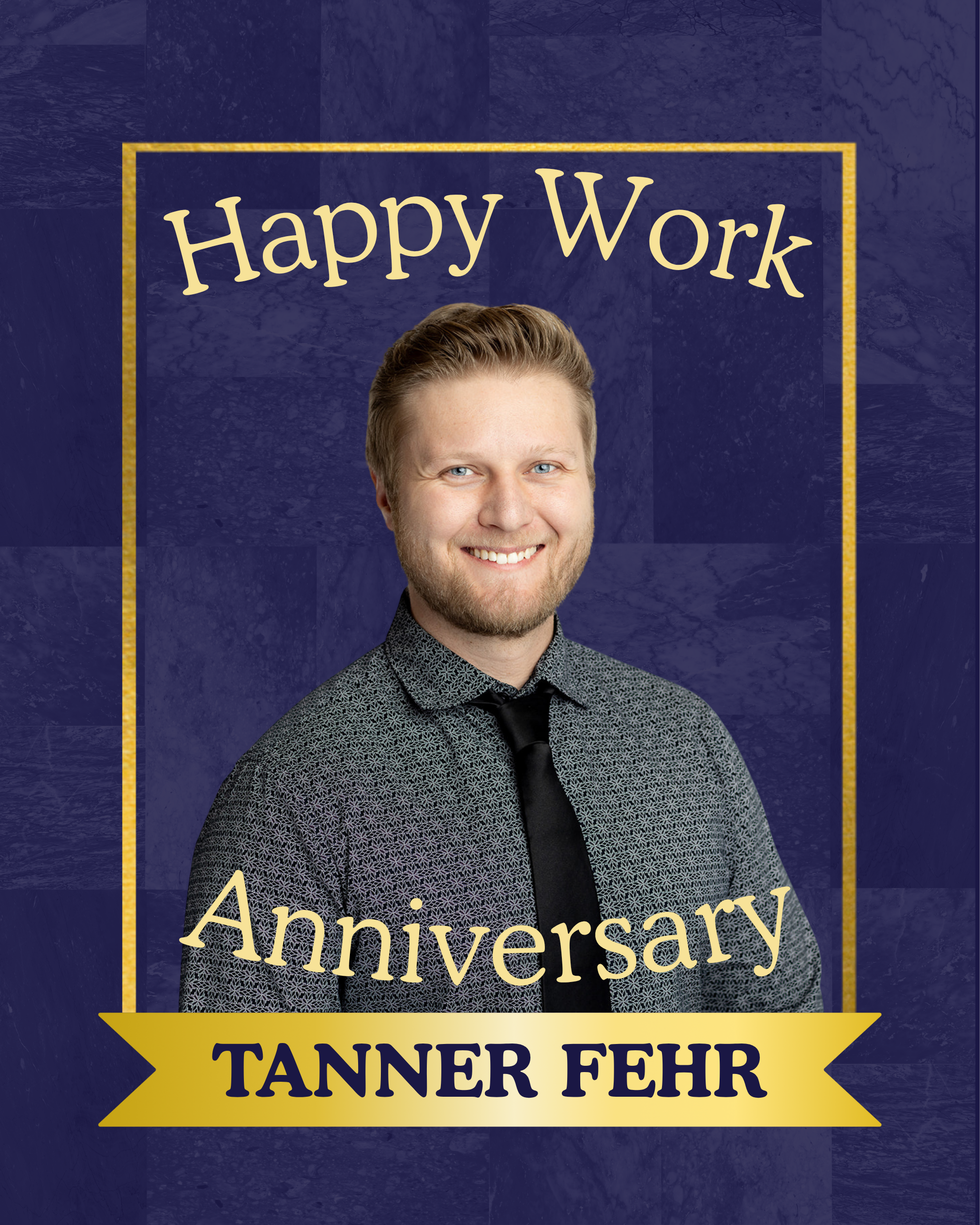
Happy 4-Year Work Anniversary, Tanner!
Since joining our team in 2022, Tanner has been an essential part of helping our clients build clear, confident financial plans. As our Associate Advisor, his dedication, knowledge, and genuine care for the people we serve make a difference every single day!
Thank you, Tanner, for four amazing years of hard work and partnership. We are so grateful to have you on the team!
Since joining our team in 2022, Tanner has been an essential part of helping our clients build clear, confident financial plans. As our Associate Advisor, his dedication, knowledge, and genuine care for the people we serve make a difference every single day!
Thank you, Tanner, for four amazing years of hard work and partnership. We are so grateful to have you on the team!
Happy 4-Year Work Anniversary, Tanner!
Since joining our team in 2022, Tanner has been an essential part of helping our clients build clear, confident financial plans. As our Associate Advisor, his dedication, knowledge, and genuine care for the people we serve make a difference every single day!
Thank you, Tanner, for four amazing years of hard work and partnership. We are so grateful to have you on the team!
Since joining our team in 2022, Tanner has been an essential part of helping our clients build clear, confident financial plans. As our Associate Advisor, his dedication, knowledge, and genuine care for the people we serve make a difference every single day!
Thank you, Tanner, for four amazing years of hard work and partnership. We are so grateful to have you on the team!

What’s the difference between critical illness insurance and life insurance?
If you became seriously ill tomorrow, would your financial roadmap still work the way you expected?
Many people understand the importance of life insurance. Fewer understand how critical illness insurance can help support them while they're still here.
Life insurance can help protect the people you love if you're no longer there to provide for them. Critical illness insurance may help provide financial support if you're diagnosed with a covered condition and need time to focus on recovery.
Understanding the difference is an important step toward building a more complete protection strategy.
Learn more about how life insurance and critical illness insurance compare and reach out if you'd like to discuss what makes sense for your situation.
https://www.sunlife.ca/en/health/critical-illness-insurance/critical-illness-insurance-vs-life-insurance/?WT.mc_id=en-ca%3Asocial%3Anetworks%3Ayext%3Aadvisor
Many people understand the importance of life insurance. Fewer understand how critical illness insurance can help support them while they're still here.
Life insurance can help protect the people you love if you're no longer there to provide for them. Critical illness insurance may help provide financial support if you're diagnosed with a covered condition and need time to focus on recovery.
Understanding the difference is an important step toward building a more complete protection strategy.
Learn more about how life insurance and critical illness insurance compare and reach out if you'd like to discuss what makes sense for your situation.
https://www.sunlife.ca/en/health/critical-illness-insurance/critical-illness-insurance-vs-life-insurance/?WT.mc_id=en-ca%3Asocial%3Anetworks%3Ayext%3Aadvisor
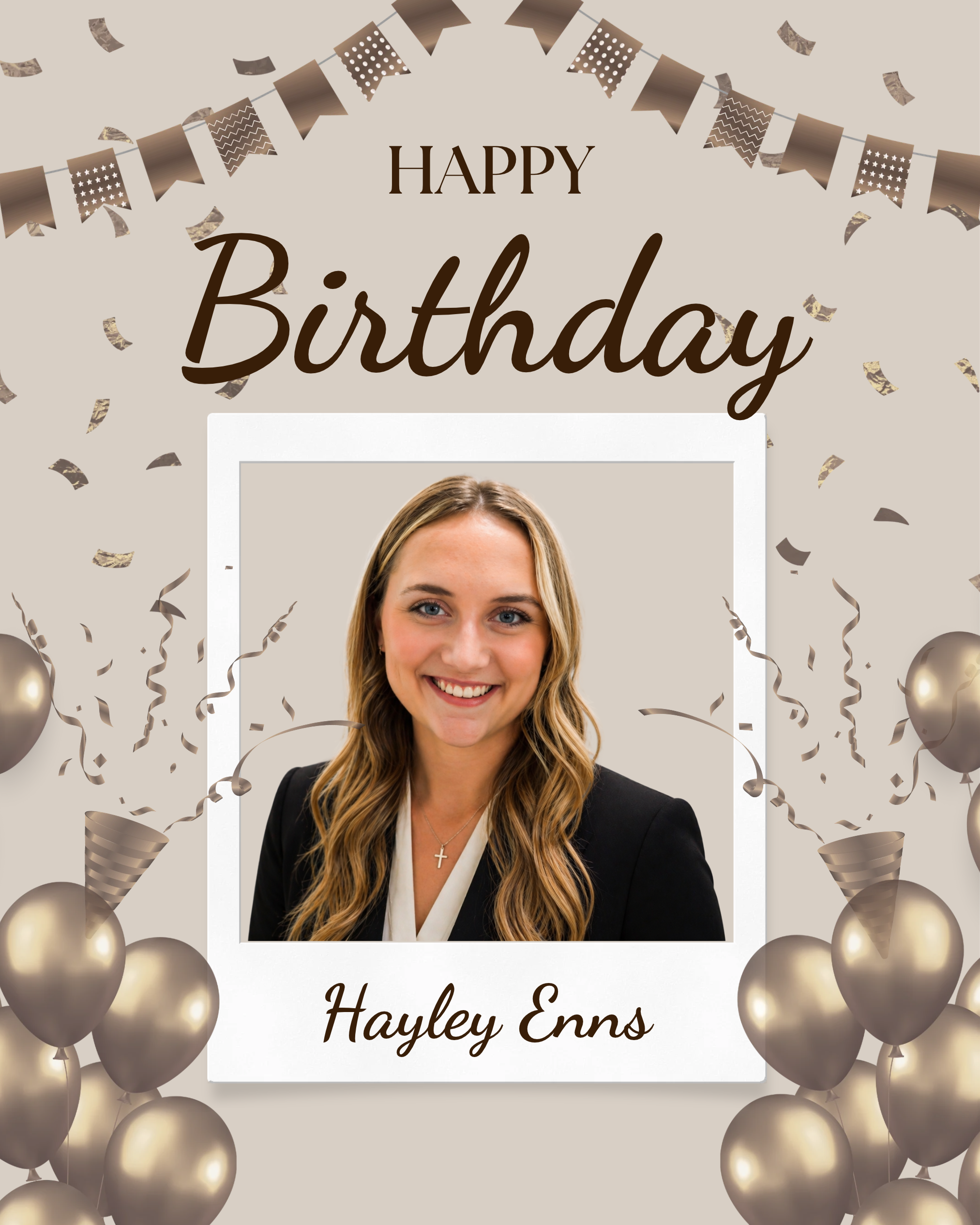
Happy Birthday Hayley! 🎉
We are so thankful for everything you do, from helping with random admin tasks to keeping our clients smiling on their birthdays. We hope you have the best day celebrating!
We are so thankful for everything you do, from helping with random admin tasks to keeping our clients smiling on their birthdays. We hope you have the best day celebrating!
Happy Birthday Hayley! 🎉
We are so thankful for everything you do, from helping with random admin tasks to keeping our clients smiling on their birthdays. We hope you have the best day celebrating!
We are so thankful for everything you do, from helping with random admin tasks to keeping our clients smiling on their birthdays. We hope you have the best day celebrating!
Make sure you have the right investment strategy to go with your savings habits!
You can be a world-class saver and still miss your financial targets if your money isn't properly deployed. The mistake might not be that you’re not saving. It might be HOW you’re saving.
If your savings habits are strong but your money is stuck in accounts that don't match your timeline, you're missing out on major compound growth.
Are your savings sitting in cash or are they actively working for you?
#CompoundGrowth #FinancialGoals #InvestingForBeginners #Budgeting #WealthMindset
You can be a world-class saver and still miss your financial targets if your money isn't properly deployed. The mistake might not be that you’re not saving. It might be HOW you’re saving.
If your savings habits are strong but your money is stuck in accounts that don't match your timeline, you're missing out on major compound growth.
Are your savings sitting in cash or are they actively working for you?
#CompoundGrowth #FinancialGoals #InvestingForBeginners #Budgeting #WealthMindset
Watch video

Being conservative with your money has a cost too.
When people think about financial risk, they usually picture market volatility - the stock market dipping and watching account balances go down. But staying entirely "safe" by leaving long-term cash in low-interest accounts introduces a different, quieter danger: inflation and insufficient growth.
If your money is earning 2% while the cost of living rises by 3% or 4%, you aren't actually protecting your wealth. You are guaranteeing a loss in purchasing power over time.
For short-term goals, absolute safety makes sense. But for money you won't touch for decades, being too conservative means missing out on the compound growth needed to fund your future.
True risk management means balancing short-term protection with long-term growth.
Is your current strategy protecting you from market drops, or is it costing you future wealth?
#PersonalFinanceCanada #Investing101 #FinancialLiteracy #Inflation #WealthBuilding
When people think about financial risk, they usually picture market volatility - the stock market dipping and watching account balances go down. But staying entirely "safe" by leaving long-term cash in low-interest accounts introduces a different, quieter danger: inflation and insufficient growth.
If your money is earning 2% while the cost of living rises by 3% or 4%, you aren't actually protecting your wealth. You are guaranteeing a loss in purchasing power over time.
For short-term goals, absolute safety makes sense. But for money you won't touch for decades, being too conservative means missing out on the compound growth needed to fund your future.
True risk management means balancing short-term protection with long-term growth.
Is your current strategy protecting you from market drops, or is it costing you future wealth?
#PersonalFinanceCanada #Investing101 #FinancialLiteracy #Inflation #WealthBuilding
Watch video

The biggest mistake you can make with your money is investing without a deadline.
I would never tell you how to invest until I knew this: What is your specific timeline?
Money is not just "money." It represents completely different goals that require different thinking:
• Short-Term (0–2 years): Your emergency fund or a house down payment in two years. This money belongs in a safe, guaranteed space. Protection over performance.
• Long-Term (10+ years): Money for retirement in 30 years. This money needs exposure to market growth so it doesn't get eaten alive by inflation. Performance over short-term protection.
When you mix these up - like putting your emergency fund into volatile stocks or keeping your 30-year retirement fund in a 1.5% savings account - your financial plan breaks down.
Before you pick an investment, pick a date.
#WealthBuilding #FinancialFreedom #TFSA #RRSP #FinancialGoals
I would never tell you how to invest until I knew this: What is your specific timeline?
Money is not just "money." It represents completely different goals that require different thinking:
• Short-Term (0–2 years): Your emergency fund or a house down payment in two years. This money belongs in a safe, guaranteed space. Protection over performance.
• Long-Term (10+ years): Money for retirement in 30 years. This money needs exposure to market growth so it doesn't get eaten alive by inflation. Performance over short-term protection.
When you mix these up - like putting your emergency fund into volatile stocks or keeping your 30-year retirement fund in a 1.5% savings account - your financial plan breaks down.
Before you pick an investment, pick a date.
#WealthBuilding #FinancialFreedom #TFSA #RRSP #FinancialGoals
Watch video
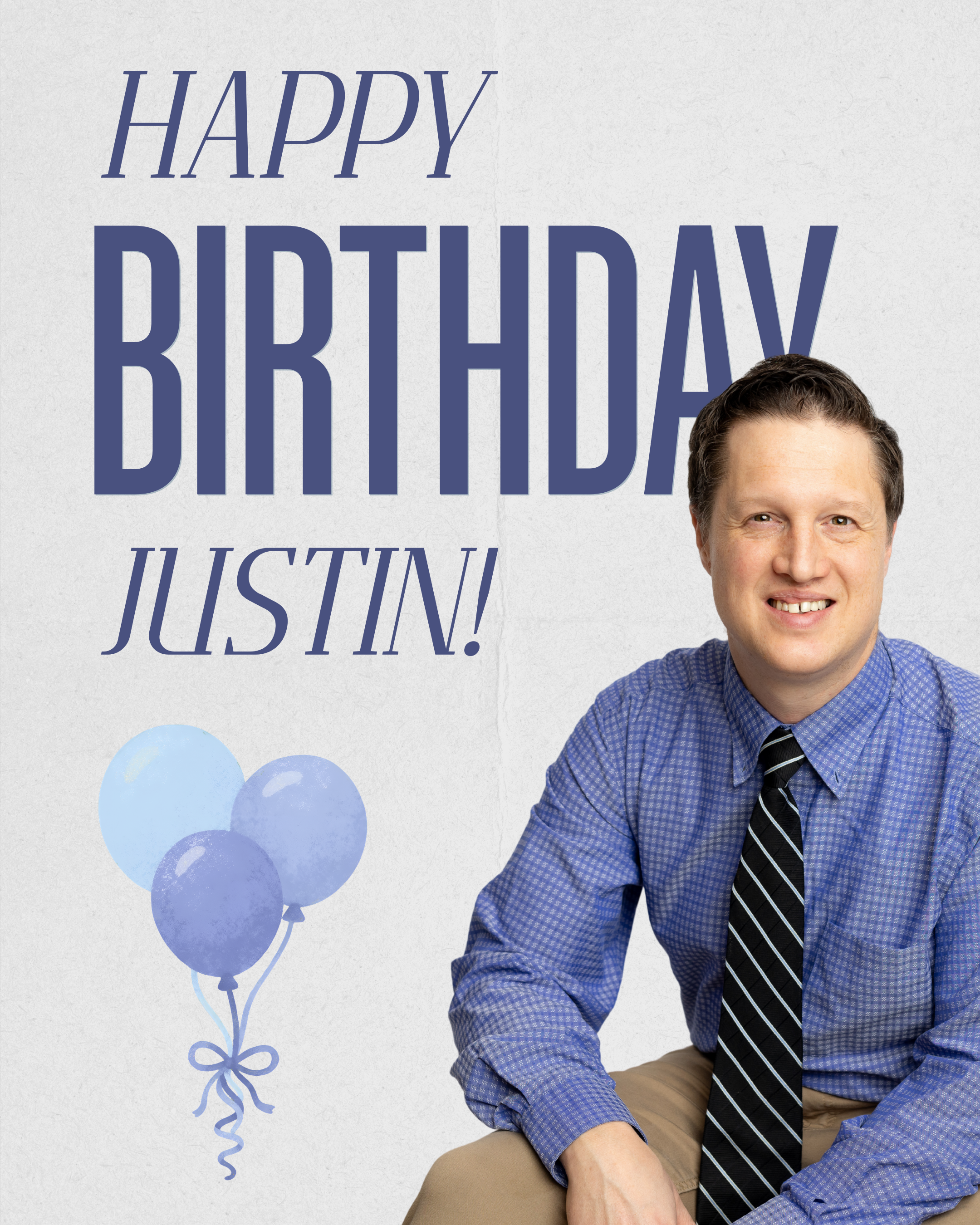
Join us in celebrating Justin LaPeare's birthday today!
Whether he’s helping clients build their financial freedom or supporting the team here at Victorious Financial Services, Justin always brings his best. We're incredibly lucky to have him on the team!
Have an amazing day, Justin, you deserve it!
Whether he’s helping clients build their financial freedom or supporting the team here at Victorious Financial Services, Justin always brings his best. We're incredibly lucky to have him on the team!
Have an amazing day, Justin, you deserve it!
Join us in celebrating Justin LaPeare's birthday today!
Whether he’s helping clients build their financial freedom or supporting the team here at Victorious Financial Services, Justin always brings his best. We're incredibly lucky to have him on the team!
Have an amazing day, Justin, you deserve it!
Whether he’s helping clients build their financial freedom or supporting the team here at Victorious Financial Services, Justin always brings his best. We're incredibly lucky to have him on the team!
Have an amazing day, Justin, you deserve it!

Are you letting one of the best tax shelters in Canada go to waste?
"Is your TFSA maxed out?" is one of the first questions we look at when building a personal financial roadmap.
Here is why your TFSA needs your active attention:
• True Tax-Free Freedom: Unlike an RRSP, you don't pay a single cent of tax when you withdraw your money in retirement.
• Compounding Power: Because the government can't touch the growth, your investments compound much faster over time.
• Ultimate Flexibility: You can take the money out at any time for a major asset purchase, emergency, or lifestyle milestone without penalty.
If you have extra cash sitting in a standard taxable bank account, moving it into your TFSA should be a top priority.
"Is your TFSA maxed out?" is one of the first questions we look at when building a personal financial roadmap.
Here is why your TFSA needs your active attention:
• True Tax-Free Freedom: Unlike an RRSP, you don't pay a single cent of tax when you withdraw your money in retirement.
• Compounding Power: Because the government can't touch the growth, your investments compound much faster over time.
• Ultimate Flexibility: You can take the money out at any time for a major asset purchase, emergency, or lifestyle milestone without penalty.
If you have extra cash sitting in a standard taxable bank account, moving it into your TFSA should be a top priority.
Are you letting one of the best tax shelters in Canada go to waste?
"Is your TFSA maxed out?" is one of the first questions we look at when building a personal financial roadmap.
Here is why your TFSA needs your active attention:
• True Tax-Free Freedom: Unlike an RRSP, you don't pay a single cent of tax when you withdraw your money in retirement.
• Compounding Power: Because the government can't touch the growth, your investments compound much faster over time.
• Ultimate Flexibility: You can take the money out at any time for a major asset purchase, emergency, or lifestyle milestone without penalty.
If you have extra cash sitting in a standard taxable bank account, moving it into your TFSA should be a top priority.
"Is your TFSA maxed out?" is one of the first questions we look at when building a personal financial roadmap.
Here is why your TFSA needs your active attention:
• True Tax-Free Freedom: Unlike an RRSP, you don't pay a single cent of tax when you withdraw your money in retirement.
• Compounding Power: Because the government can't touch the growth, your investments compound much faster over time.
• Ultimate Flexibility: You can take the money out at any time for a major asset purchase, emergency, or lifestyle milestone without penalty.
If you have extra cash sitting in a standard taxable bank account, moving it into your TFSA should be a top priority.
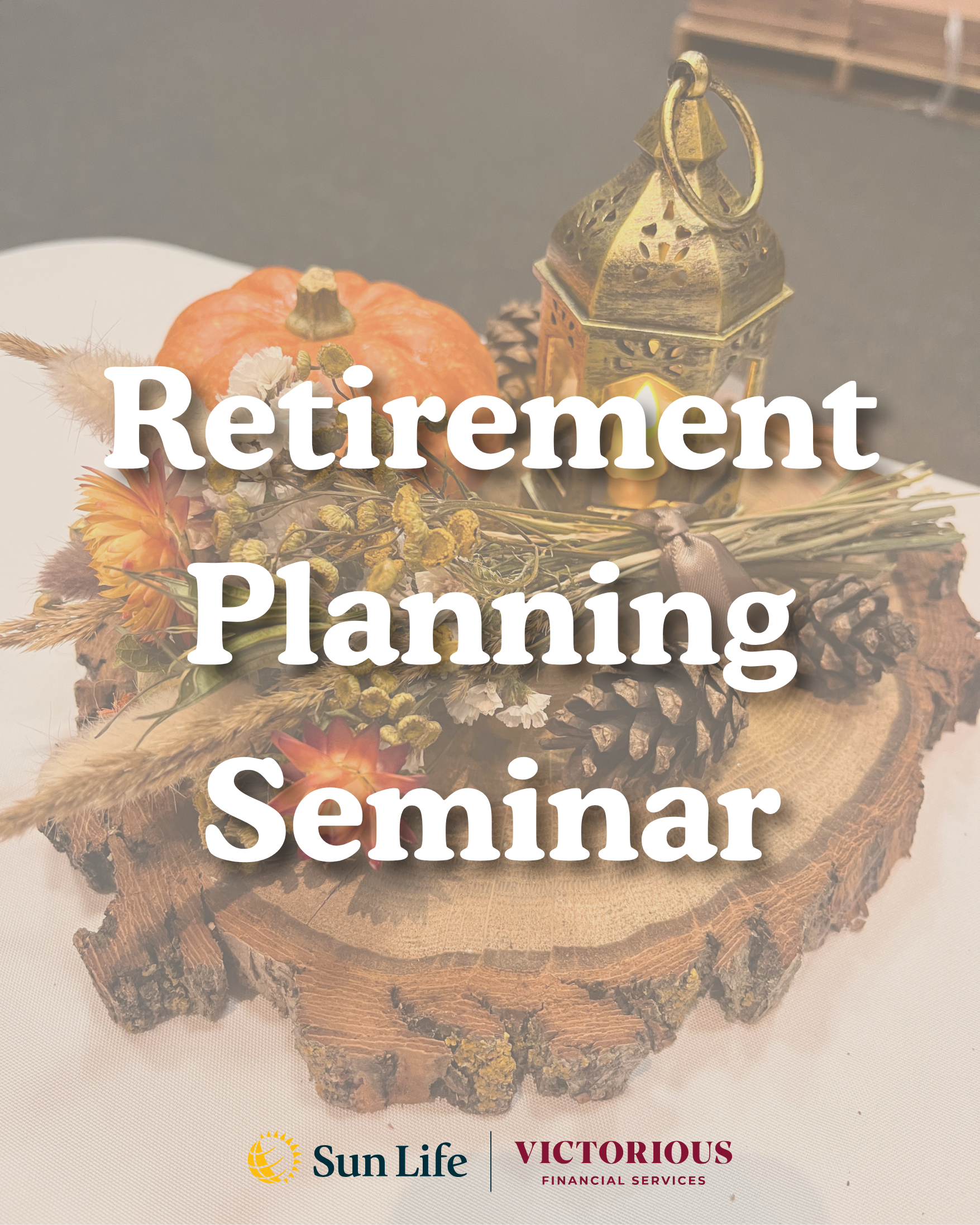
What an incredible turnout for our Retirement Planning Seminar!
A massive thank you to everyone who joined us at the Days Inn Hotel in Winkler for an amazing evening of networking, great conversations, and high-impact strategies.
Retirement planning isn’t a series of separate choices - every financial and legal decision is completely connected. Whether you are 25 or 55, taking control of your roadmap today is what brings true peace of mind tomorrow.
A special shout-out and thank you to our incredible lineup of speakers for bringing so much wisdom:
• Kim Jensen Doty on breaking down account "income shells" (TFSA, RRSP, FHSA) and building an interconnected retirement blueprint.
• Liam Jones (Fidelity Investments) on beating the inflation trap, understanding market history, and staying disciplined through normal market cycles.
• Scott Johnston (MMJS Law) on the essential legal tools everyone needs - including wills, Power of Attorneys (POAs), health care directives, and choosing the right executors to protect your legacy.
And an extra special thank you to Marina Sawatzky at New Style Catering! The food and snacks were absolutely spectacular, and your top-notch service truly made the evening unforgettable.
The big takeaway from the night? The difference in retirement isn’t necessarily what you earn over a lifetime - it’s what you keep.
Missed out on this event or ready to customize these strategies into your own personalized financial roadmap? We've got you covered.
Book a complimentary, one-on-one strategy session with one of our advisors today:
📩 Email maureen.lemky@sunlife.com
📞 Call our office at 204-745-6312
#RetirementPlanning #WinklerMB #CarmanMB #FinancialLiteracy #FidelityInvestments #EstatePlanning #NewStyleCatering #VictoriousFinancial #SunLifeFinancial
A massive thank you to everyone who joined us at the Days Inn Hotel in Winkler for an amazing evening of networking, great conversations, and high-impact strategies.
Retirement planning isn’t a series of separate choices - every financial and legal decision is completely connected. Whether you are 25 or 55, taking control of your roadmap today is what brings true peace of mind tomorrow.
A special shout-out and thank you to our incredible lineup of speakers for bringing so much wisdom:
• Kim Jensen Doty on breaking down account "income shells" (TFSA, RRSP, FHSA) and building an interconnected retirement blueprint.
• Liam Jones (Fidelity Investments) on beating the inflation trap, understanding market history, and staying disciplined through normal market cycles.
• Scott Johnston (MMJS Law) on the essential legal tools everyone needs - including wills, Power of Attorneys (POAs), health care directives, and choosing the right executors to protect your legacy.
And an extra special thank you to Marina Sawatzky at New Style Catering! The food and snacks were absolutely spectacular, and your top-notch service truly made the evening unforgettable.
The big takeaway from the night? The difference in retirement isn’t necessarily what you earn over a lifetime - it’s what you keep.
Missed out on this event or ready to customize these strategies into your own personalized financial roadmap? We've got you covered.
Book a complimentary, one-on-one strategy session with one of our advisors today:
📩 Email maureen.lemky@sunlife.com
📞 Call our office at 204-745-6312
#RetirementPlanning #WinklerMB #CarmanMB #FinancialLiteracy #FidelityInvestments #EstatePlanning #NewStyleCatering #VictoriousFinancial #SunLifeFinancial
What an incredible turnout for our Retirement Planning Seminar!
A massive thank you to everyone who joined us at the Days Inn Hotel in Winkler for an amazing evening of networking, great conversations, and high-impact strategies.
Retirement planning isn’t a series of separate choices - every financial and legal decision is completely connected. Whether you are 25 or 55, taking control of your roadmap today is what brings true peace of mind tomorrow.
A special shout-out and thank you to our incredible lineup of speakers for bringing so much wisdom:
• Kim Jensen Doty on breaking down account "income shells" (TFSA, RRSP, FHSA) and building an interconnected retirement blueprint.
• Liam Jones (Fidelity Investments) on beating the inflation trap, understanding market history, and staying disciplined through normal market cycles.
• Scott Johnston (MMJS Law) on the essential legal tools everyone needs - including wills, Power of Attorneys (POAs), health care directives, and choosing the right executors to protect your legacy.
And an extra special thank you to Marina Sawatzky at New Style Catering! The food and snacks were absolutely spectacular, and your top-notch service truly made the evening unforgettable.
The big takeaway from the night? The difference in retirement isn’t necessarily what you earn over a lifetime - it’s what you keep.
Missed out on this event or ready to customize these strategies into your own personalized financial roadmap? We've got you covered.
Book a complimentary, one-on-one strategy session with one of our advisors today:
📩 Email maureen.lemky@sunlife.com
📞 Call our office at 204-745-6312
#RetirementPlanning #WinklerMB #CarmanMB #FinancialLiteracy #FidelityInvestments #EstatePlanning #NewStyleCatering #VictoriousFinancial #SunLifeFinancial
A massive thank you to everyone who joined us at the Days Inn Hotel in Winkler for an amazing evening of networking, great conversations, and high-impact strategies.
Retirement planning isn’t a series of separate choices - every financial and legal decision is completely connected. Whether you are 25 or 55, taking control of your roadmap today is what brings true peace of mind tomorrow.
A special shout-out and thank you to our incredible lineup of speakers for bringing so much wisdom:
• Kim Jensen Doty on breaking down account "income shells" (TFSA, RRSP, FHSA) and building an interconnected retirement blueprint.
• Liam Jones (Fidelity Investments) on beating the inflation trap, understanding market history, and staying disciplined through normal market cycles.
• Scott Johnston (MMJS Law) on the essential legal tools everyone needs - including wills, Power of Attorneys (POAs), health care directives, and choosing the right executors to protect your legacy.
And an extra special thank you to Marina Sawatzky at New Style Catering! The food and snacks were absolutely spectacular, and your top-notch service truly made the evening unforgettable.
The big takeaway from the night? The difference in retirement isn’t necessarily what you earn over a lifetime - it’s what you keep.
Missed out on this event or ready to customize these strategies into your own personalized financial roadmap? We've got you covered.
Book a complimentary, one-on-one strategy session with one of our advisors today:
📩 Email maureen.lemky@sunlife.com
📞 Call our office at 204-745-6312
#RetirementPlanning #WinklerMB #CarmanMB #FinancialLiteracy #FidelityInvestments #EstatePlanning #NewStyleCatering #VictoriousFinancial #SunLifeFinancial
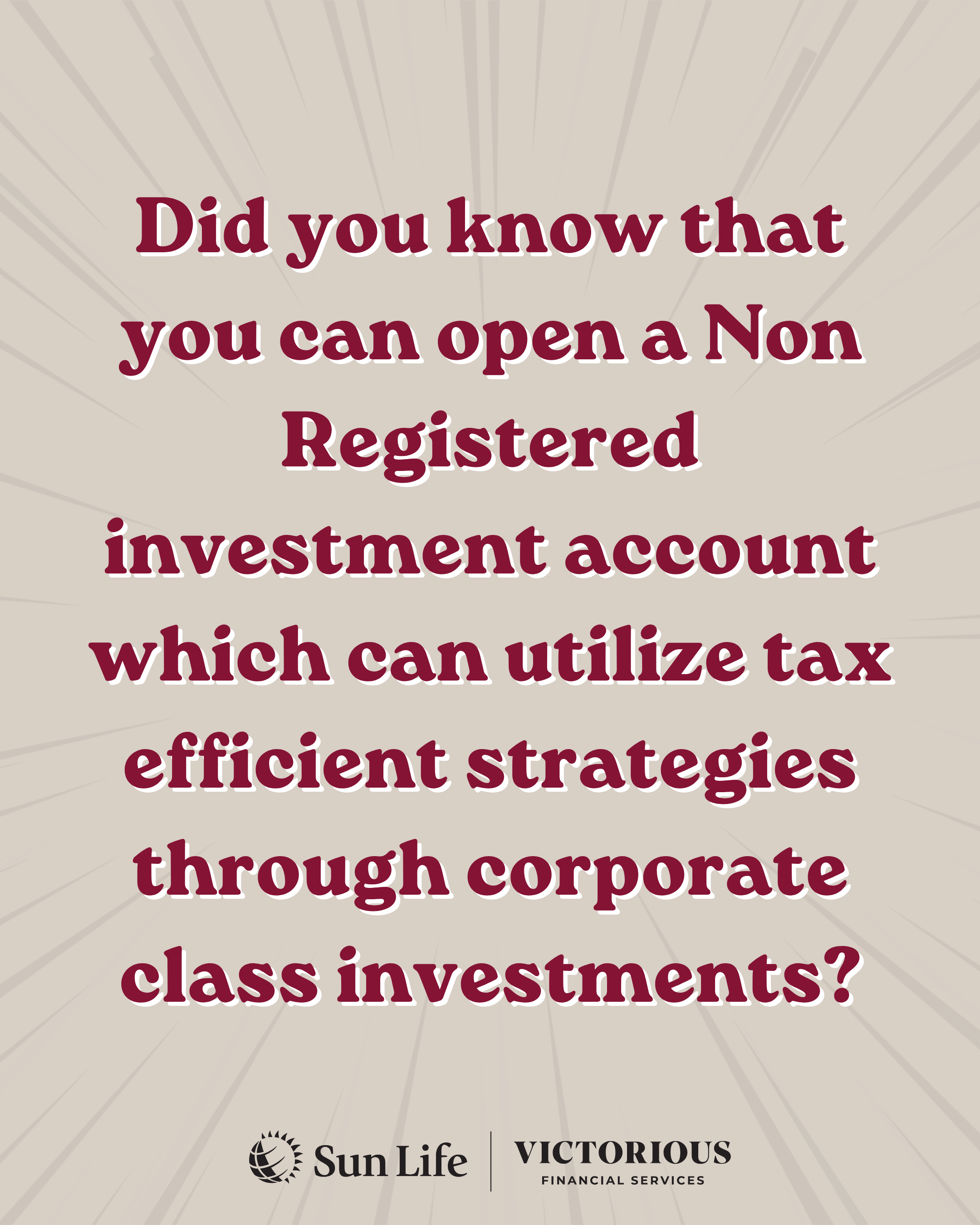
Did you know you can use a non-registered investment account paired with "corporate class" structures to keep your tax bill low?
Here is why corporate class investments are a game-changer for taxable wealth:
• They help prevent heavily taxed interest and foreign dividends from showing up on your annual tax slip.
• They convert ordinary investment income into tax-advantaged capital gains or Canadian dividends.
• They allow your wealth to grow faster by deferring taxes and letting compound interest do its job.
It’s one of our favorite strategies for business owners, farmers, and retirees who want to protect their hard-earned capital.
Here is why corporate class investments are a game-changer for taxable wealth:
• They help prevent heavily taxed interest and foreign dividends from showing up on your annual tax slip.
• They convert ordinary investment income into tax-advantaged capital gains or Canadian dividends.
• They allow your wealth to grow faster by deferring taxes and letting compound interest do its job.
It’s one of our favorite strategies for business owners, farmers, and retirees who want to protect their hard-earned capital.
Did you know you can use a non-registered investment account paired with "corporate class" structures to keep your tax bill low?
Here is why corporate class investments are a game-changer for taxable wealth:
• They help prevent heavily taxed interest and foreign dividends from showing up on your annual tax slip.
• They convert ordinary investment income into tax-advantaged capital gains or Canadian dividends.
• They allow your wealth to grow faster by deferring taxes and letting compound interest do its job.
It’s one of our favorite strategies for business owners, farmers, and retirees who want to protect their hard-earned capital.
Here is why corporate class investments are a game-changer for taxable wealth:
• They help prevent heavily taxed interest and foreign dividends from showing up on your annual tax slip.
• They convert ordinary investment income into tax-advantaged capital gains or Canadian dividends.
• They allow your wealth to grow faster by deferring taxes and letting compound interest do its job.
It’s one of our favorite strategies for business owners, farmers, and retirees who want to protect their hard-earned capital.

You’re 30 and earning 2% on your long-term savings. Here’s what I’d be thinking about.
A 2% return isn’t automatically wrong. It completely depends on your timeline.
If you need that money in 12 months, keeping it safe makes total sense. But money needed in 30 years should never be treated the same as money needed next year. If you treat long-term wealth like an emergency fund, inflation wins and your wealth stalls.
Your investments must match your objectives.
#FinancialGoals #CompoundGrowth #InvestingForBeginners #SavingsAccount #PersonalFinance
A 2% return isn’t automatically wrong. It completely depends on your timeline.
If you need that money in 12 months, keeping it safe makes total sense. But money needed in 30 years should never be treated the same as money needed next year. If you treat long-term wealth like an emergency fund, inflation wins and your wealth stalls.
Your investments must match your objectives.
#FinancialGoals #CompoundGrowth #InvestingForBeginners #SavingsAccount #PersonalFinance
Watch video

Do you know how long it takes your money to double?
Using the Rule of 72, the math is simple: divide 72 by your rate of return.
If your money is sitting in an account earning 2.2%, you are waiting 33 years for a single double. But if you're invested for the long term earning 5% to 7%, your money doubles every 10 to 14 years.
When you start young, time does the heavy lifting for you. Don't waste your most valuable asset.
#CompoundGrowth #WealthMindset #RuleOf72 #YouthInvesting #FinanceGoals
Using the Rule of 72, the math is simple: divide 72 by your rate of return.
If your money is sitting in an account earning 2.2%, you are waiting 33 years for a single double. But if you're invested for the long term earning 5% to 7%, your money doubles every 10 to 14 years.
When you start young, time does the heavy lifting for you. Don't waste your most valuable asset.
#CompoundGrowth #WealthMindset #RuleOf72 #YouthInvesting #FinanceGoals
Watch video
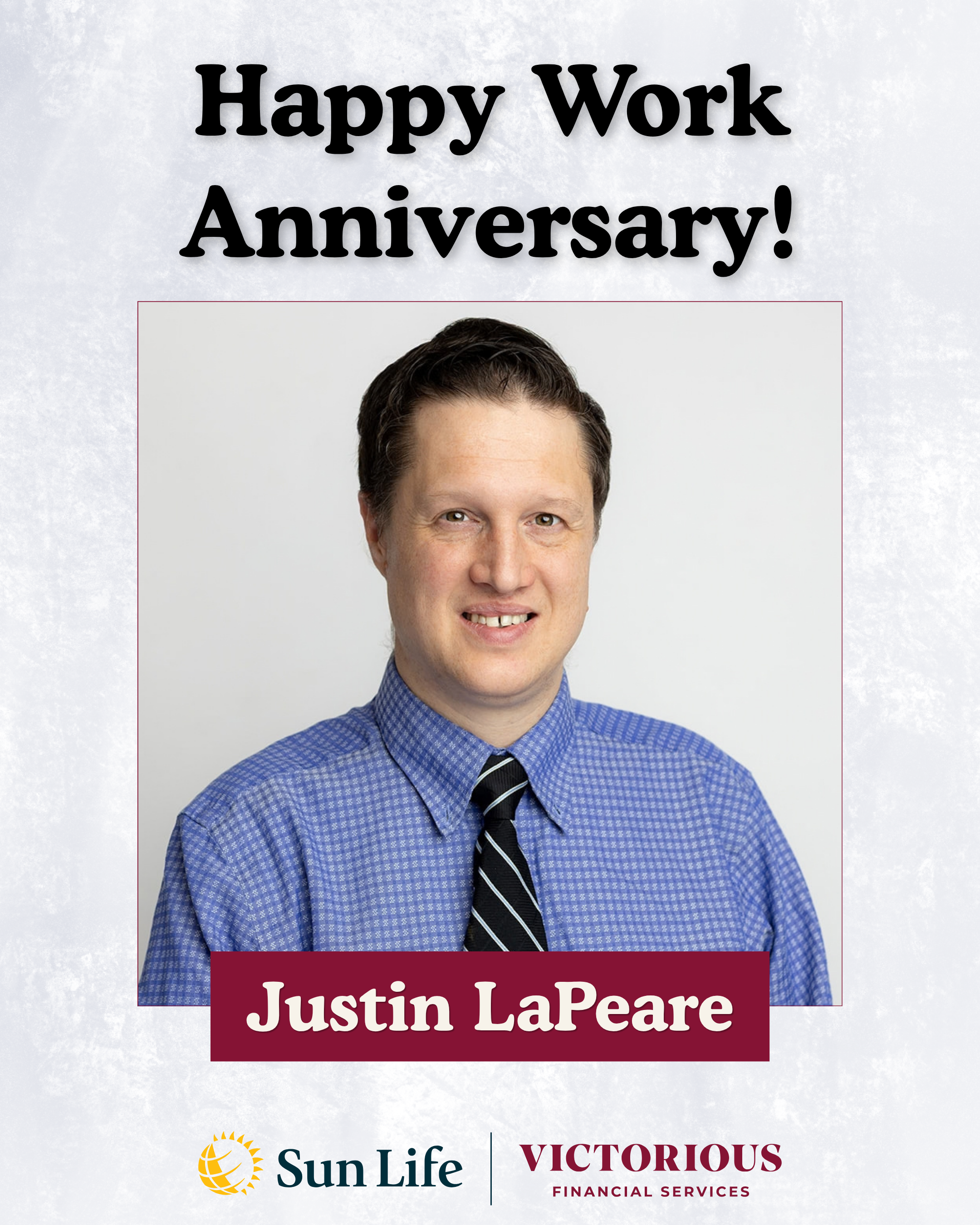
Happy 6-year work anniversary to Justin!
It is hard to believe it has been six years since you joined the team on October 1, 2020. Thank you for six years of amazing service, dedication to our clients, and the positive energy you bring to the team every single day. We are incredibly lucky to have you on the team at Victorious Financial Services!
Wishing you many more successful years ahead!
It is hard to believe it has been six years since you joined the team on October 1, 2020. Thank you for six years of amazing service, dedication to our clients, and the positive energy you bring to the team every single day. We are incredibly lucky to have you on the team at Victorious Financial Services!
Wishing you many more successful years ahead!
Happy 6-year work anniversary to Justin!
It is hard to believe it has been six years since you joined the team on October 1, 2020. Thank you for six years of amazing service, dedication to our clients, and the positive energy you bring to the team every single day. We are incredibly lucky to have you on the team at Victorious Financial Services!
Wishing you many more successful years ahead!
It is hard to believe it has been six years since you joined the team on October 1, 2020. Thank you for six years of amazing service, dedication to our clients, and the positive energy you bring to the team every single day. We are incredibly lucky to have you on the team at Victorious Financial Services!
Wishing you many more successful years ahead!
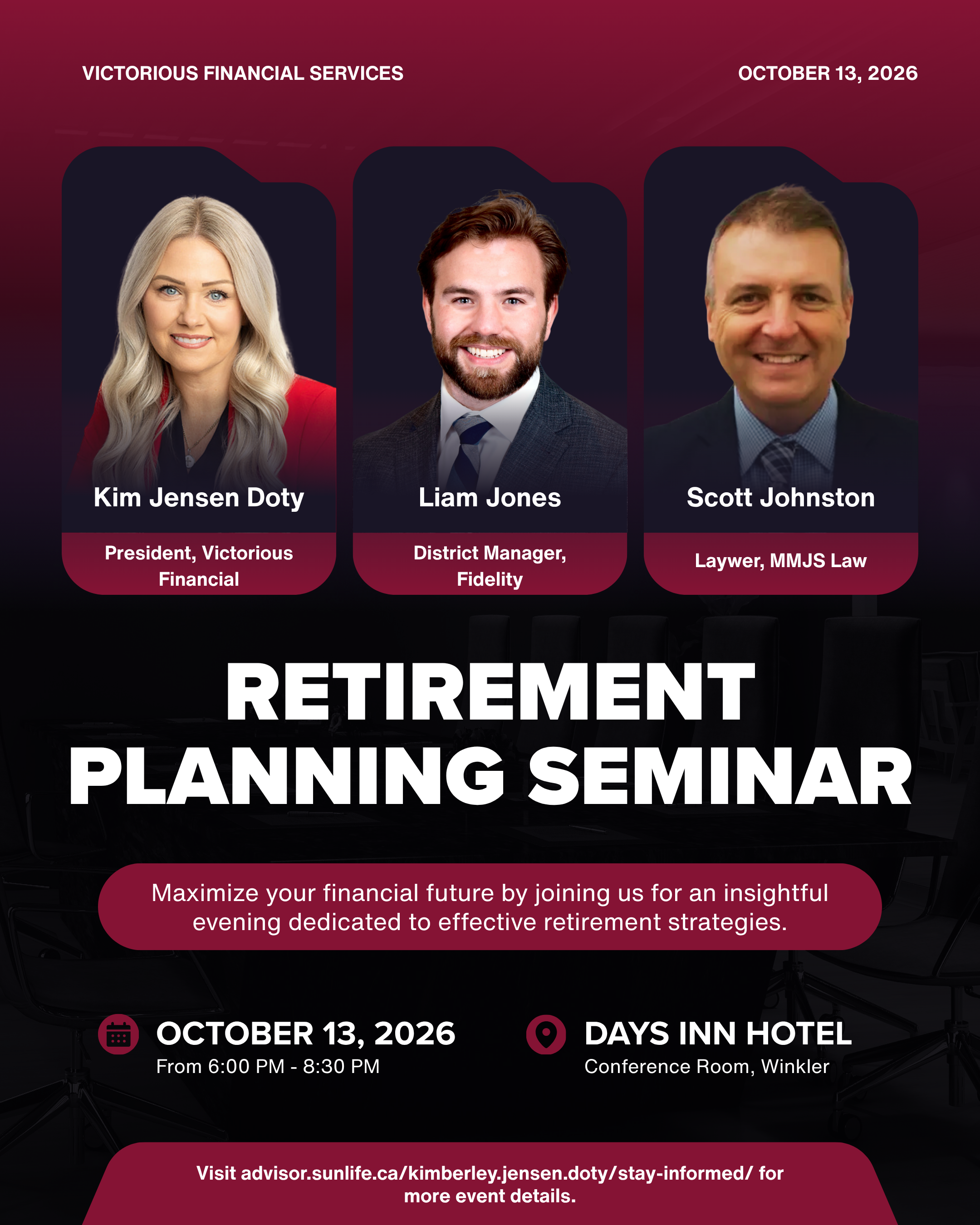
Meet your speakers for the Retirement Planning Seminar!
We are thrilled to introduce the incredible lineup of experts joining Kim Jensen Doty (President of Victorious Financial) to deliver high-impact wealth strategies at our upcoming event:
- Liam Jones (District Manager at Fidelity Investments) – bringing deep industry expertise on asset maximization and investment growth.
- Scott Johnston (Lawyer at MMJS Law) – sharing essential legal strategies for estate protection and wealth transition.
No matter your age, this is your opportunity to gain powerful financial wisdom, network with others in the community, and engage in great conversations!
RSVP DEADLINE: Monday, October 5th
Spaces at the Days Inn are limited and registration is mandatory so we can finalize numbers for food and drinks.
🗓️ Date: Tuesday, October 13, 2026
🕕 Time: 6:00 PM – 8:30 PM
📍 Location: Conference Room – Days Inn Hotel, Winkler
☕ Included: Free refreshments, snacks, coffee, and drinks will be served!
Admission is 100% free, and you are more than welcome to bring a friend, family member, or colleague who wants to build a smarter financial roadmap.
📩 How to Register: Secure your spots before the Monday, Oct 5th deadline by emailing makkedah.veldman@sunlife.com or by calling 204-745-6312.
#RetirementPlanning #WinklerMB #FinancialLiteracy #FidelityInvestments #EstatePlanning #RRSP #TFSA #VictoriousFinancial #SunLifeFinancial
We are thrilled to introduce the incredible lineup of experts joining Kim Jensen Doty (President of Victorious Financial) to deliver high-impact wealth strategies at our upcoming event:
- Liam Jones (District Manager at Fidelity Investments) – bringing deep industry expertise on asset maximization and investment growth.
- Scott Johnston (Lawyer at MMJS Law) – sharing essential legal strategies for estate protection and wealth transition.
No matter your age, this is your opportunity to gain powerful financial wisdom, network with others in the community, and engage in great conversations!
RSVP DEADLINE: Monday, October 5th
Spaces at the Days Inn are limited and registration is mandatory so we can finalize numbers for food and drinks.
🗓️ Date: Tuesday, October 13, 2026
🕕 Time: 6:00 PM – 8:30 PM
📍 Location: Conference Room – Days Inn Hotel, Winkler
☕ Included: Free refreshments, snacks, coffee, and drinks will be served!
Admission is 100% free, and you are more than welcome to bring a friend, family member, or colleague who wants to build a smarter financial roadmap.
📩 How to Register: Secure your spots before the Monday, Oct 5th deadline by emailing makkedah.veldman@sunlife.com or by calling 204-745-6312.
#RetirementPlanning #WinklerMB #FinancialLiteracy #FidelityInvestments #EstatePlanning #RRSP #TFSA #VictoriousFinancial #SunLifeFinancial
Meet your speakers for the Retirement Planning Seminar!
We are thrilled to introduce the incredible lineup of experts joining Kim Jensen Doty (President of Victorious Financial) to deliver high-impact wealth strategies at our upcoming event:
- Liam Jones (District Manager at Fidelity Investments) – bringing deep industry expertise on asset maximization and investment growth.
- Scott Johnston (Lawyer at MMJS Law) – sharing essential legal strategies for estate protection and wealth transition.
No matter your age, this is your opportunity to gain powerful financial wisdom, network with others in the community, and engage in great conversations!
RSVP DEADLINE: Monday, October 5th
Spaces at the Days Inn are limited and registration is mandatory so we can finalize numbers for food and drinks.
🗓️ Date: Tuesday, October 13, 2026
🕕 Time: 6:00 PM – 8:30 PM
📍 Location: Conference Room – Days Inn Hotel, Winkler
☕ Included: Free refreshments, snacks, coffee, and drinks will be served!
Admission is 100% free, and you are more than welcome to bring a friend, family member, or colleague who wants to build a smarter financial roadmap.
📩 How to Register: Secure your spots before the Monday, Oct 5th deadline by emailing makkedah.veldman@sunlife.com or by calling 204-745-6312.
#RetirementPlanning #WinklerMB #FinancialLiteracy #FidelityInvestments #EstatePlanning #RRSP #TFSA #VictoriousFinancial #SunLifeFinancial
We are thrilled to introduce the incredible lineup of experts joining Kim Jensen Doty (President of Victorious Financial) to deliver high-impact wealth strategies at our upcoming event:
- Liam Jones (District Manager at Fidelity Investments) – bringing deep industry expertise on asset maximization and investment growth.
- Scott Johnston (Lawyer at MMJS Law) – sharing essential legal strategies for estate protection and wealth transition.
No matter your age, this is your opportunity to gain powerful financial wisdom, network with others in the community, and engage in great conversations!
RSVP DEADLINE: Monday, October 5th
Spaces at the Days Inn are limited and registration is mandatory so we can finalize numbers for food and drinks.
🗓️ Date: Tuesday, October 13, 2026
🕕 Time: 6:00 PM – 8:30 PM
📍 Location: Conference Room – Days Inn Hotel, Winkler
☕ Included: Free refreshments, snacks, coffee, and drinks will be served!
Admission is 100% free, and you are more than welcome to bring a friend, family member, or colleague who wants to build a smarter financial roadmap.
📩 How to Register: Secure your spots before the Monday, Oct 5th deadline by emailing makkedah.veldman@sunlife.com or by calling 204-745-6312.
#RetirementPlanning #WinklerMB #FinancialLiteracy #FidelityInvestments #EstatePlanning #RRSP #TFSA #VictoriousFinancial #SunLifeFinancial
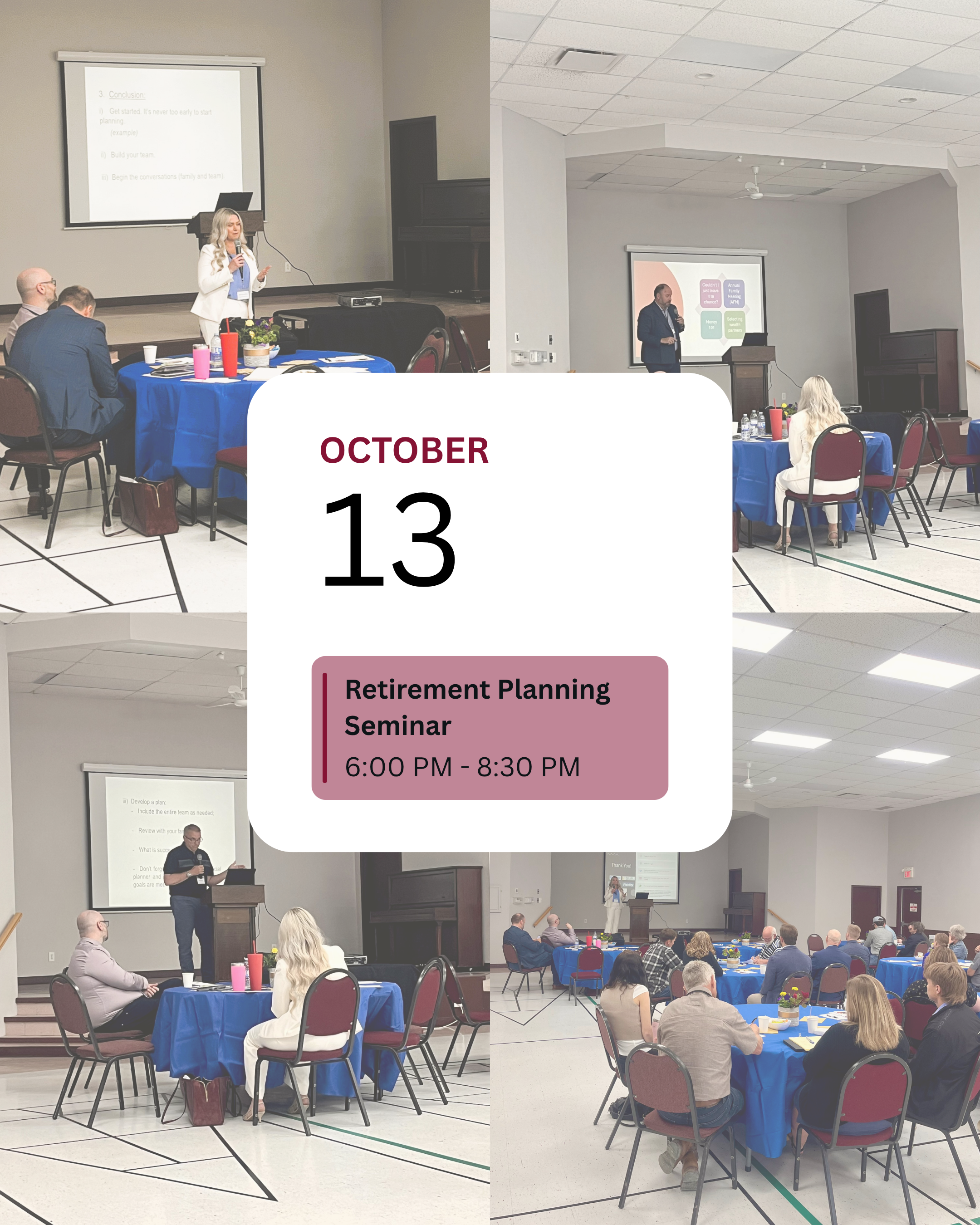
Ready to retire with confidence?
No matter your age, retirement planning starts now. Join us on October 13th for an exclusive, in-person seminar packed with high-impact strategies, community networking, and great conversations.
We are incredibly excited to welcome back two fantastic returning guest speakers to share their expert insights!
🗓️ Date: Tuesday, October 13
🕕 Time: 6:00 PM – 8:30 PM
📍 Location: Conference Room - Days Inn Hotel, Winkler
☕ Food & Drinks: Free refreshments, snacks, coffee, and drinks will be served!
What we will cover:
Asset Maximization: Balancing investments across your RRSP, TFSA, and non-reg accounts.
Tax Efficiency: Minimizing what you owe so you can keep more of your savings.
Wealth Protection: Practical steps to transition smoothly into retirement.
Admission is 100% free, but spaces are limited and registration is required.
Bring a friend! Invite a family member, colleague, or friend who would benefit from building a financial roadmap.
How to Register: Secure your spots today by emailing makkedah.veldman@sunlife.com or by calling 204-745-6312. Let us know how many seats to save for you and your guests!
#RetirementPlanning #WinklerMB #FinancialLiteracy #RRSP #TFSA #VictoriousFinancial #SunLifeFinancial
No matter your age, retirement planning starts now. Join us on October 13th for an exclusive, in-person seminar packed with high-impact strategies, community networking, and great conversations.
We are incredibly excited to welcome back two fantastic returning guest speakers to share their expert insights!
🗓️ Date: Tuesday, October 13
🕕 Time: 6:00 PM – 8:30 PM
📍 Location: Conference Room - Days Inn Hotel, Winkler
☕ Food & Drinks: Free refreshments, snacks, coffee, and drinks will be served!
What we will cover:
Asset Maximization: Balancing investments across your RRSP, TFSA, and non-reg accounts.
Tax Efficiency: Minimizing what you owe so you can keep more of your savings.
Wealth Protection: Practical steps to transition smoothly into retirement.
Admission is 100% free, but spaces are limited and registration is required.
Bring a friend! Invite a family member, colleague, or friend who would benefit from building a financial roadmap.
How to Register: Secure your spots today by emailing makkedah.veldman@sunlife.com or by calling 204-745-6312. Let us know how many seats to save for you and your guests!
#RetirementPlanning #WinklerMB #FinancialLiteracy #RRSP #TFSA #VictoriousFinancial #SunLifeFinancial
Ready to retire with confidence?
No matter your age, retirement planning starts now. Join us on October 13th for an exclusive, in-person seminar packed with high-impact strategies, community networking, and great conversations.
We are incredibly excited to welcome back two fantastic returning guest speakers to share their expert insights!
🗓️ Date: Tuesday, October 13
🕕 Time: 6:00 PM – 8:30 PM
📍 Location: Conference Room - Days Inn Hotel, Winkler
☕ Food & Drinks: Free refreshments, snacks, coffee, and drinks will be served!
What we will cover:
Asset Maximization: Balancing investments across your RRSP, TFSA, and non-reg accounts.
Tax Efficiency: Minimizing what you owe so you can keep more of your savings.
Wealth Protection: Practical steps to transition smoothly into retirement.
Admission is 100% free, but spaces are limited and registration is required.
Bring a friend! Invite a family member, colleague, or friend who would benefit from building a financial roadmap.
How to Register: Secure your spots today by emailing makkedah.veldman@sunlife.com or by calling 204-745-6312. Let us know how many seats to save for you and your guests!
#RetirementPlanning #WinklerMB #FinancialLiteracy #RRSP #TFSA #VictoriousFinancial #SunLifeFinancial
No matter your age, retirement planning starts now. Join us on October 13th for an exclusive, in-person seminar packed with high-impact strategies, community networking, and great conversations.
We are incredibly excited to welcome back two fantastic returning guest speakers to share their expert insights!
🗓️ Date: Tuesday, October 13
🕕 Time: 6:00 PM – 8:30 PM
📍 Location: Conference Room - Days Inn Hotel, Winkler
☕ Food & Drinks: Free refreshments, snacks, coffee, and drinks will be served!
What we will cover:
Asset Maximization: Balancing investments across your RRSP, TFSA, and non-reg accounts.
Tax Efficiency: Minimizing what you owe so you can keep more of your savings.
Wealth Protection: Practical steps to transition smoothly into retirement.
Admission is 100% free, but spaces are limited and registration is required.
Bring a friend! Invite a family member, colleague, or friend who would benefit from building a financial roadmap.
How to Register: Secure your spots today by emailing makkedah.veldman@sunlife.com or by calling 204-745-6312. Let us know how many seats to save for you and your guests!
#RetirementPlanning #WinklerMB #FinancialLiteracy #RRSP #TFSA #VictoriousFinancial #SunLifeFinancial

Stop treating your TFSA like a regular bank account.
Many Canadians make the mistake of using their Tax-Free Savings Account simply to hold cash. But if you have a long time horizon ahead of you, holding low-yield assets inside a TFSA means you are wasting its biggest advantage.
The real magic of the TFSA is that every single dollar of capital gains, dividends, and interest earned inside the account is completely tax-free when you withdraw it. If your money is earning a very low return, your tax savings are practically zero.
If your financial objective is decades away, your portfolio should likely reflect that long-term timeline with assets that outpace inflation. If you have a short-term objective, safety makes sense. The key is alignment.
Check your account today and ask yourself: Does this investment match my timeline?
#PersonalFinance #TFSA #Investing101 #FinancialFreedom #RetirementPlanning
Many Canadians make the mistake of using their Tax-Free Savings Account simply to hold cash. But if you have a long time horizon ahead of you, holding low-yield assets inside a TFSA means you are wasting its biggest advantage.
The real magic of the TFSA is that every single dollar of capital gains, dividends, and interest earned inside the account is completely tax-free when you withdraw it. If your money is earning a very low return, your tax savings are practically zero.
If your financial objective is decades away, your portfolio should likely reflect that long-term timeline with assets that outpace inflation. If you have a short-term objective, safety makes sense. The key is alignment.
Check your account today and ask yourself: Does this investment match my timeline?
#PersonalFinance #TFSA #Investing101 #FinancialFreedom #RetirementPlanning
Watch video
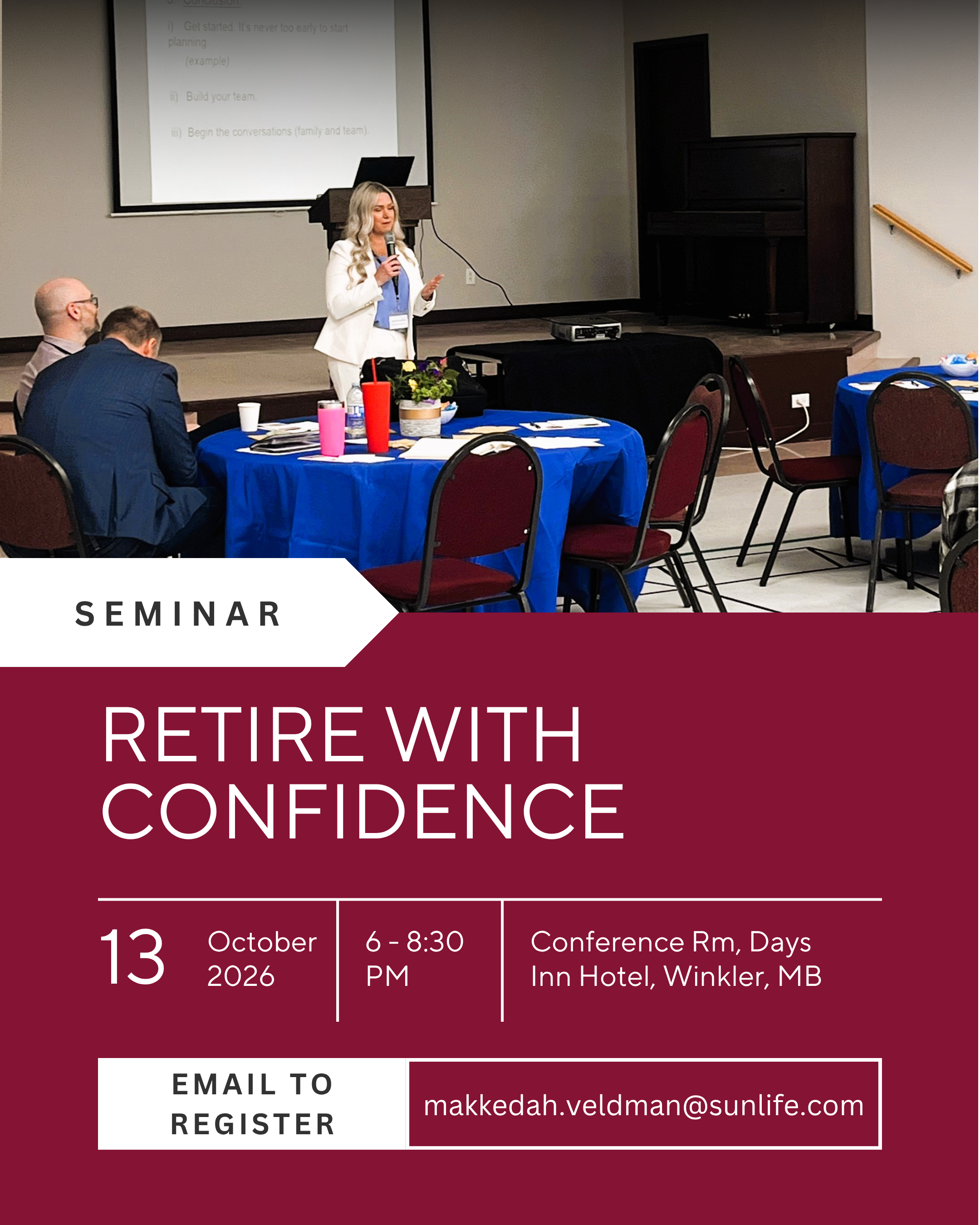
Ready to take control of your financial future?
No matter your age, retirement planning starts now. Join us for an exclusive, in-person seminar packed with high-impact strategies, community networking, and great conversations.
We are incredibly excited to welcome back two fantastic guest speakers to share their expert insights!
🗓️ Date: Tuesday, October 13
🕕 Time: 6:00 PM – 8:30 PM
📍 Location: Conference Room – Days Inn Hotel, Winkler
☕ Food & Drinks: Free refreshments, snacks, coffee, and drinks will be served!
What we will cover:
Asset Maximization: Balancing investments across your RRSP, TFSA, and non-reg accounts.
Tax Efficiency: Minimizing what you owe so you can keep more of your savings.
Wealth Protection: Practical steps to transition smoothly into retirement.
Admission is 100% free, but spaces are limited and registration is required.
Bring a friend! Invite a family member, colleague, or friend who would benefit from building a financial retirement roadmap.
📩 How to Register: Secure your spots today by emailing makkedah.veldman@sunlife.com or by calling 204-745-6312. Let us know how many seats to save for you and your guests!
#RetirementPlanning #WinklerMB #FinancialLiteracy #RRSP #TFSA #VictoriousFinancial #SunLifeFinancial
No matter your age, retirement planning starts now. Join us for an exclusive, in-person seminar packed with high-impact strategies, community networking, and great conversations.
We are incredibly excited to welcome back two fantastic guest speakers to share their expert insights!
🗓️ Date: Tuesday, October 13
🕕 Time: 6:00 PM – 8:30 PM
📍 Location: Conference Room – Days Inn Hotel, Winkler
☕ Food & Drinks: Free refreshments, snacks, coffee, and drinks will be served!
What we will cover:
Asset Maximization: Balancing investments across your RRSP, TFSA, and non-reg accounts.
Tax Efficiency: Minimizing what you owe so you can keep more of your savings.
Wealth Protection: Practical steps to transition smoothly into retirement.
Admission is 100% free, but spaces are limited and registration is required.
Bring a friend! Invite a family member, colleague, or friend who would benefit from building a financial retirement roadmap.
📩 How to Register: Secure your spots today by emailing makkedah.veldman@sunlife.com or by calling 204-745-6312. Let us know how many seats to save for you and your guests!
#RetirementPlanning #WinklerMB #FinancialLiteracy #RRSP #TFSA #VictoriousFinancial #SunLifeFinancial
Ready to take control of your financial future?
No matter your age, retirement planning starts now. Join us for an exclusive, in-person seminar packed with high-impact strategies, community networking, and great conversations.
We are incredibly excited to welcome back two fantastic guest speakers to share their expert insights!
🗓️ Date: Tuesday, October 13
🕕 Time: 6:00 PM – 8:30 PM
📍 Location: Conference Room – Days Inn Hotel, Winkler
☕ Food & Drinks: Free refreshments, snacks, coffee, and drinks will be served!
What we will cover:
Asset Maximization: Balancing investments across your RRSP, TFSA, and non-reg accounts.
Tax Efficiency: Minimizing what you owe so you can keep more of your savings.
Wealth Protection: Practical steps to transition smoothly into retirement.
Admission is 100% free, but spaces are limited and registration is required.
Bring a friend! Invite a family member, colleague, or friend who would benefit from building a financial retirement roadmap.
📩 How to Register: Secure your spots today by emailing makkedah.veldman@sunlife.com or by calling 204-745-6312. Let us know how many seats to save for you and your guests!
#RetirementPlanning #WinklerMB #FinancialLiteracy #RRSP #TFSA #VictoriousFinancial #SunLifeFinancial
No matter your age, retirement planning starts now. Join us for an exclusive, in-person seminar packed with high-impact strategies, community networking, and great conversations.
We are incredibly excited to welcome back two fantastic guest speakers to share their expert insights!
🗓️ Date: Tuesday, October 13
🕕 Time: 6:00 PM – 8:30 PM
📍 Location: Conference Room – Days Inn Hotel, Winkler
☕ Food & Drinks: Free refreshments, snacks, coffee, and drinks will be served!
What we will cover:
Asset Maximization: Balancing investments across your RRSP, TFSA, and non-reg accounts.
Tax Efficiency: Minimizing what you owe so you can keep more of your savings.
Wealth Protection: Practical steps to transition smoothly into retirement.
Admission is 100% free, but spaces are limited and registration is required.
Bring a friend! Invite a family member, colleague, or friend who would benefit from building a financial retirement roadmap.
📩 How to Register: Secure your spots today by emailing makkedah.veldman@sunlife.com or by calling 204-745-6312. Let us know how many seats to save for you and your guests!
#RetirementPlanning #WinklerMB #FinancialLiteracy #RRSP #TFSA #VictoriousFinancial #SunLifeFinancial
Ready to take control of your financial future?
No matter your age, retirement planning starts now. Join us for an exclusive, in-person seminar packed with high-impact strategies, community networking, and great conversations.
We are incredibly excited to welcome back two fantastic guest speakers to share their expert insights!
🗓️ Date: Tuesday, October 13
🕕 Time: 6:00 PM – 8:30 PM
📍 Location: Conference Room – Days Inn Hotel, Winkler
☕ Food & Drinks: Free refreshments, snacks, coffee, and drinks will be served!
What we will cover:
Asset Maximization: Balancing investments across your RRSP, TFSA, and non-reg accounts.
Tax Efficiency: Minimizing what you owe so you can keep more of your savings.
Wealth Protection: Practical steps to transition smoothly into retirement.
Admission is 100% free, but spaces are limited and registration is required.
Bring a friend! Invite a family member, colleague, or friend who would benefit from building a financial retirement roadmap.
📩 How to Register: Secure your spots today by emailing makkedah.veldman@sunlife.com or by calling 204-745-6312. Let us know how many seats to save for you and your guests!
#RetirementPlanning #WinklerMB #FinancialLiteracy #RRSP #TFSA #VictoriousFinancial #SunLifeFinancial
No matter your age, retirement planning starts now. Join us for an exclusive, in-person seminar packed with high-impact strategies, community networking, and great conversations.
We are incredibly excited to welcome back two fantastic guest speakers to share their expert insights!
🗓️ Date: Tuesday, October 13
🕕 Time: 6:00 PM – 8:30 PM
📍 Location: Conference Room – Days Inn Hotel, Winkler
☕ Food & Drinks: Free refreshments, snacks, coffee, and drinks will be served!
What we will cover:
Asset Maximization: Balancing investments across your RRSP, TFSA, and non-reg accounts.
Tax Efficiency: Minimizing what you owe so you can keep more of your savings.
Wealth Protection: Practical steps to transition smoothly into retirement.
Admission is 100% free, but spaces are limited and registration is required.
Bring a friend! Invite a family member, colleague, or friend who would benefit from building a financial retirement roadmap.
📩 How to Register: Secure your spots today by emailing makkedah.veldman@sunlife.com or by calling 204-745-6312. Let us know how many seats to save for you and your guests!
#RetirementPlanning #WinklerMB #FinancialLiteracy #RRSP #TFSA #VictoriousFinancial #SunLifeFinancial
Ready to take control of your financial future?
No matter your age, retirement planning starts now. Join us for an exclusive, in-person seminar packed with high-impact strategies, community networking, and great conversations.
We are incredibly excited to welcome back two fantastic guest speakers to share their expert insights!
🗓️ Date: Tuesday, October 13
🕕 Time: 6:00 PM – 8:30 PM
📍 Location: Conference Room – Days Inn Hotel, Winkler
☕ Food & Drinks: Free refreshments, snacks, coffee, and drinks will be served!
What we will cover:
Asset Maximization: Balancing investments across your RRSP, TFSA, and non-reg accounts.
Tax Efficiency: Minimizing what you owe so you can keep more of your savings.
Wealth Protection: Practical steps to transition smoothly into retirement.
Admission is 100% free, but spaces are limited and registration is required.
Bring a friend! Invite a family member, colleague, or friend who would benefit from building a financial retirement roadmap.
📩 How to Register: Secure your spots today by emailing makkedah.veldman@sunlife.com or by calling 204-745-6312. Let us know how many seats to save for you and your guests!
#RetirementPlanning #WinklerMB #FinancialLiteracy #RRSP #TFSA #VictoriousFinancial #SunLifeFinancial
No matter your age, retirement planning starts now. Join us for an exclusive, in-person seminar packed with high-impact strategies, community networking, and great conversations.
We are incredibly excited to welcome back two fantastic guest speakers to share their expert insights!
🗓️ Date: Tuesday, October 13
🕕 Time: 6:00 PM – 8:30 PM
📍 Location: Conference Room – Days Inn Hotel, Winkler
☕ Food & Drinks: Free refreshments, snacks, coffee, and drinks will be served!
What we will cover:
Asset Maximization: Balancing investments across your RRSP, TFSA, and non-reg accounts.
Tax Efficiency: Minimizing what you owe so you can keep more of your savings.
Wealth Protection: Practical steps to transition smoothly into retirement.
Admission is 100% free, but spaces are limited and registration is required.
Bring a friend! Invite a family member, colleague, or friend who would benefit from building a financial retirement roadmap.
📩 How to Register: Secure your spots today by emailing makkedah.veldman@sunlife.com or by calling 204-745-6312. Let us know how many seats to save for you and your guests!
#RetirementPlanning #WinklerMB #FinancialLiteracy #RRSP #TFSA #VictoriousFinancial #SunLifeFinancial
The TFSA is much more that just a savings account.
Let’s clear up a massive misconception that is costing young Canadians thousands of dollars in future wealth.
The word “savings” in Tax-Free Savings Account has confused an entire generation, leading people to treat a massive investment superpower like a boring cash account.
Think of the TFSA as a protective, tax-free shell. If you are just leaving cash sitting there earning pennies, you are missing out. The actual investments you hold inside that shell—like stocks, mutual funds, or ETFs—are what determine your real returns and your risk level.
The best part? This strategy isn't unique to the TFSA. It is the exact same concept for your FHSA, RRSP, and non-registered accounts!
#TFSA #InvestingForBeginners #FinancialLiteracy #YoungInvestors #VictoriousFinancial
Let’s clear up a massive misconception that is costing young Canadians thousands of dollars in future wealth.
The word “savings” in Tax-Free Savings Account has confused an entire generation, leading people to treat a massive investment superpower like a boring cash account.
Think of the TFSA as a protective, tax-free shell. If you are just leaving cash sitting there earning pennies, you are missing out. The actual investments you hold inside that shell—like stocks, mutual funds, or ETFs—are what determine your real returns and your risk level.
The best part? This strategy isn't unique to the TFSA. It is the exact same concept for your FHSA, RRSP, and non-registered accounts!
#TFSA #InvestingForBeginners #FinancialLiteracy #YoungInvestors #VictoriousFinancial
Watch video

More travel? Less stress? More time with family? Retirement planning involves more than saving enough money. It's about creating a life you look forward to.
What does your ideal retirement include? Share one thing in the comments. ⬇️
If you're building toward retirement, together we can review if your financial strategy is aligned with the future you envision. https://advisor.sunlife.ca/kimberley.jensen.doty/
What does your ideal retirement include? Share one thing in the comments. ⬇️
If you're building toward retirement, together we can review if your financial strategy is aligned with the future you envision. https://advisor.sunlife.ca/kimberley.jensen.doty/
More travel? Less stress? More time with family? Retirement planning involves more than saving enough money. It's about creating a life you look forward to.
What does your ideal retirement include? Share one thing in the comments. ⬇️
If you're building toward retirement, together we can review if your financial strategy is aligned with the future you envision. https://advisor.sunlife.ca/kimberley.jensen.doty/
What does your ideal retirement include? Share one thing in the comments. ⬇️
If you're building toward retirement, together we can review if your financial strategy is aligned with the future you envision. https://advisor.sunlife.ca/kimberley.jensen.doty/

Have questions?
Here to help answer your questions, provide clarity about products and get you started on the road to achieving your goals.

We are contracted with Sun Life Financial Distributors (Canada) Inc., a member of the Sunlife group of companies. Mutual funds distributed by Sun Life Financial Investment Services (Canada) Inc.